Tiếng Việt
 中文 (中国)
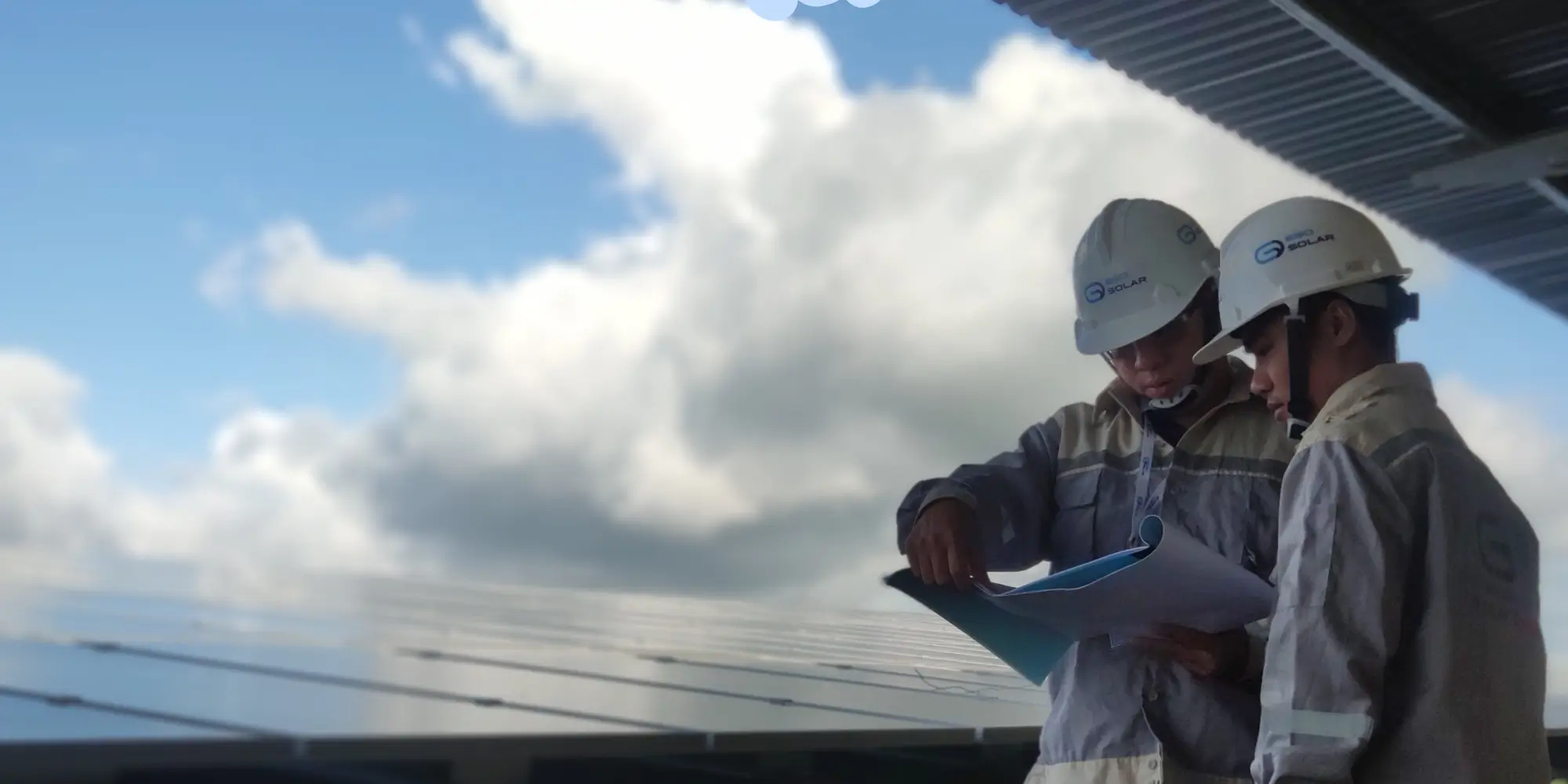
1.5 MW Rooftop Solar Project at South Hanoi Supporting Industrial Park
Industrial rooftops offer valuable space for generating solar electricity close to where businesses consume it. The 1.5 MW rooftop solar project in Hanoi, located at South Hanoi Supporting Industrial Park, provides a practical illustration of how factory buildings can accommodate renewable energy infrastructure.
The project photographs show solar arrays extending across factory roof sections, with wide views of the surrounding industrial site. These images help businesses understand the physical scale of a factory rooftop solar installation and how it can fit within an existing production environment.
For companies considering a similar investment, the key question goes beyond how many panels a roof can accommodate. A suitable system must also reflect the building’s condition, the factory’s electricity demand and the requirements for long-term operation.
This article introduces the project and explains the main considerations behind planning, using and maintaining an industrial rooftop solar system.
Overview of the 1.5 MW Factory Rooftop Solar Project
The installation is located at South Hanoi Supporting Industrial Park and has a stated system capacity of 1.5 MW. Its rooftop configuration makes use of factory roof space rather than a separate ground-mounted solar site.
| Project detail | Information |
|---|---|
| Location | South Hanoi Supporting Industrial Park, Vietnam |
| Stated system capacity | 1.5 MW |
| Installation type | Factory rooftop solar |
| Installation area | Industrial building rooftops |
| Available project visuals | Site photographs and panoramic rooftop views |
The project demonstrates an approach that may be relevant to businesses seeking to make additional use of existing buildings. Where suitable roof space is available, solar panels can be incorporated into the factory site while ground-level areas remain available for production, storage and transport.
However, this installation should be treated as a reference rather than a configuration that can be copied directly. Every factory has different structural conditions, electrical infrastructure and consumption patterns.
A Closer Look at the Rooftop Solar Installation
Panoramic Views Show the Scale of the Arrays
The wide-angle photographs reveal how the solar arrays relate to the factory buildings and surrounding site. Rows of modules occupy substantial roof areas, creating a clear visual connection between the industrial premises and their energy infrastructure.
These views are useful for businesses at an early planning stage. They make the scale of rooftop solar easier to understand than equipment specifications alone.
At the same time, photographs cannot establish electricity output or financial performance. Those assessments require technical documentation, appropriate calculations and operating data.
Roof-Level Views Highlight the Arrangement of the Panels
Views along the factory roofs show how the arrays extend with the buildings. They also illustrate why rooftop design must account for the shape and characteristics of each roof section.
In a detailed design, usable space must be considered alongside roof equipment, shaded areas, drainage and maintenance access. The total roof area is therefore not necessarily the same as the area available for solar modules.
A well-considered layout balances space utilisation with the practical requirements of construction and ongoing inspection.
Site Images Provide a Starting Point for Project Discussions
Project photographs can help factory owners communicate their preferences and understand possible installation arrangements. They can also support initial discussions about roof access, equipment locations and the relationship between the solar system and the production facility.
For a complete assessment, these visual references should be reviewed alongside building information and electricity consumption records.
Why Factory Rooftops Are Worth Assessing for Solar
Making Additional Use of Existing Buildings
Factory roofs already serve an essential purpose by protecting production and storage spaces. Where structural and installation conditions are suitable, they can also support electricity generation.
This approach can be attractive to businesses that need to preserve ground-level space for manufacturing, vehicle movement or warehousing.
The opportunity must nevertheless be assessed against the roof’s actual condition. Existing defects, ageing materials or planned repairs should be identified before the solar layout is finalised.
Matching Generation with Daytime Electricity Demand
Many factories consume electricity during daylight hours, when solar generation is available. Where these patterns align, part of the electricity generated on the roof can be used directly within the facility.
The degree of alignment differs between businesses. A factory operating throughout the day has a different demand profile from one running mainly at night or shutting down at weekends.
System sizing should therefore consider both available roof space and the business’s ability to use the electricity produced.
Incorporating Future Production Plans
Electricity requirements may change when a business adds machinery, expands production or introduces additional shifts.
Known expansion plans should be discussed during the initial assessment. This helps the project team consider whether the proposed system fits current requirements and how future changes could affect its use.
For some businesses, this discussion may also inform whether installation should be completed in one phase or developed in stages.
Potential Benefits of Industrial Rooftop Solar
Supplementing Electricity Used in Production
A rooftop solar system can supply part of a factory’s electricity demand during periods of solar generation.
The amount available varies with weather, time of day, installation conditions and equipment performance. A stated capacity of 1.5 MW does not mean the system produces 1.5 MW continuously.
Understanding the distinction between power capacity and energy generation helps businesses interpret project proposals and set realistic expectations.
Reducing Grid Electricity Purchases During Relevant Periods
When solar electricity is consumed directly by the factory, it can reduce the amount of electricity purchased from the grid during those periods.
The financial value depends on actual generation, on-site consumption and the applicable electricity tariff. Two factories with similar solar capacities may therefore achieve different savings.
A useful investment proposal should make its assumptions clear and distinguish between installation costs, operating costs and expected electricity-related benefits.
Providing Additional Energy Management Data
Solar monitoring can give businesses more visibility into electricity generation at their premises.
When reviewed alongside consumption records, this information can help managers understand when solar production aligns with factory demand and when further investigation is needed.
Daily and monthly records also provide a basis for tracking system behaviour over time. Their value comes from consistent monitoring and interpretation rather than isolated performance figures.
Supporting Renewable Energy Use in Manufacturing
Factory rooftop solar offers a practical way to introduce renewable electricity into industrial operations.
For businesses communicating their progress, project photographs can be supported by verified generation and consumption data. Claims about renewable energy use or environmental benefits should be based on suitable records and calculation methods.
This approach makes sustainability reporting more informative and easier to substantiate.
What Should Be Assessed Before Installing Factory Rooftop Solar?
Roof Structure and Physical Condition
The assessment should examine the roof structure, roofing materials, existing connections and any signs of deterioration.
Areas affected by leaks, corrosion or access difficulties should be identified early. If remedial work is needed, it should be considered as part of the wider project plan.
Addressing these issues before installation can help avoid unnecessary disruption later.
Electricity Consumption and Operating Hours
Businesses can support the assessment by providing:
- Recent electricity bills covering representative operating periods.
- Daily and weekly production schedules.
- Information about major electricity-consuming equipment.
- Time-based consumption or load records, where available.
- Planned changes to machinery, shifts or production capacity.
These inputs provide a stronger basis for system sizing than roof area or a single month’s electricity expenditure alone.
Shading and Available Installation Space
Nearby structures and rooftop equipment can shade parts of a roof at particular times.
The design process should identify these constraints and assess their implications for array placement. Space for inspection and maintenance should also be included.
The objective is to develop a layout that is practical throughout the system’s service life.
Electrical Infrastructure and Equipment Locations
Existing distribution infrastructure, cable routes and suitable equipment locations all influence the project design.
Equipment should be positioned with consideration for its operating environment and future inspection requirements. Electrical assessment and installation should be carried out by appropriately qualified personnel.
Coordination with Factory Operations
Installing solar at an operating factory requires coordination with site management.
Material delivery, roof access and work involving existing electrical infrastructure should be planned around the facility’s activities. Clearly defined work areas, schedules and contact persons help construction and production teams coordinate effectively.
Monitoring and Maintenance After Installation
Tracking Generation and Equipment Alerts
Once a system is in use, its generation data and equipment status should be monitored regularly.
A low-output day does not necessarily indicate a fault. Weather conditions and operating circumstances must be considered when interpreting changes.
Persistent differences under comparable conditions may require further investigation. Continuous records make those patterns easier to identify.
Cleaning Modules According to Site Conditions
Dust and other deposits can accumulate on module surfaces, particularly in industrial environments.
Cleaning requirements should be assessed according to the level of soiling, equipment guidance and site conditions. A fixed cleaning schedule may not be appropriate for every factory.
Cleaning methods and rooftop access arrangements should be suitable for the equipment and carried out by trained personnel.
Inspecting Supporting Components
Maintenance should extend beyond the visible panel surfaces.
Mounting structures, connections, cables, inverters and electrical cabinets also require appropriate inspection. A maintenance record should document the inspection date, observations and any corrective work performed.
These records help operators track equipment condition and support future service discussions.
Exploring Industrial Solar Solutions with EGO SOLAR
EGO SOLAR’s business activities include solar equipment and system solutions, EPC services and solar cleaning and maintenance. These areas address different stages of a solar project, from development to ongoing care. egosolar.vn
For businesses assessing factory rooftop solar, a productive starting point is a clear discussion of the site, electricity demand and project objectives.
The proposed configuration, scope of work and ongoing service arrangements should be defined in the project documentation so that expectations are understood before implementation.
Learn more about EGO SOLAR or explore the company’s solar project portfolio for additional examples of solar applications.
Frequently Asked Questions
How Much Electricity Can a 1.5 MW Rooftop Solar System Generate?
Capacity alone is not enough to determine daily or annual electricity generation.
An estimate requires information about the location, solar resource, layout, equipment and system losses. Actual performance should be assessed using appropriate monitoring or metering records.
Can Every Factory Roof Support Solar Panels?
No. Suitability depends on structural conditions, roof materials, physical condition, shading and other site-specific factors.
A site assessment is necessary before deciding whether installation is feasible and what preparatory work may be required.
Can This Project’s Configuration Be Used for Another Factory?
The project can provide a visual reference, but another factory requires its own assessment.
Differences in roof geometry, electricity demand and electrical infrastructure may call for a different capacity or equipment arrangement.
What Information Should a Business Prepare Before Requesting Advice?
Useful information includes the factory location, roof photographs, available building documentation, electricity bills and operating schedules.
Businesses should also explain their investment objectives and any known plans to expand or change production.
Is Maintenance Necessary If the System Appears to Be Working Normally?
Yes. Monitoring and planned inspections remain important even when no visible problems or alerts are present.
The maintenance scope and frequency should reflect equipment guidance, site conditions and the agreed service arrangements.
Discuss Your Factory Rooftop Solar Requirements with EGO SOLAR
The 1.5 MW rooftop solar project at South Hanoi Supporting Industrial Park offers a practical view of how industrial roof space can accommodate solar generation.
For businesses considering a similar system, the next step is to assess the building and electricity demand in detail. A suitable proposal should connect installation conditions with realistic operating requirements and a clear maintenance plan.
Contact EGO SOLAR to discuss a factory rooftop solar project, equipment requirements or maintenance needs.
EGO SOLAR — EGO VIET NAM COMPANY LIMITED
- Business enquiries: +84 937 610 858
- Technical support: +84 963 147 005
- Project email: projecteam@egosolar.vn
- Customer service: cskh@egosolar.vn
- Website: egosolar.vn