Tiếng Việt
 中文 (中国)
GoodWe GW50K-ET-10: A 50 kW Hybrid Inverter for Factory Solar Systems
Factories often consume electricity across several shifts, while rooftop solar generation changes throughout the day. Combining solar power with appropriately sized battery storage can help businesses use more of the electricity generated on their own premises.
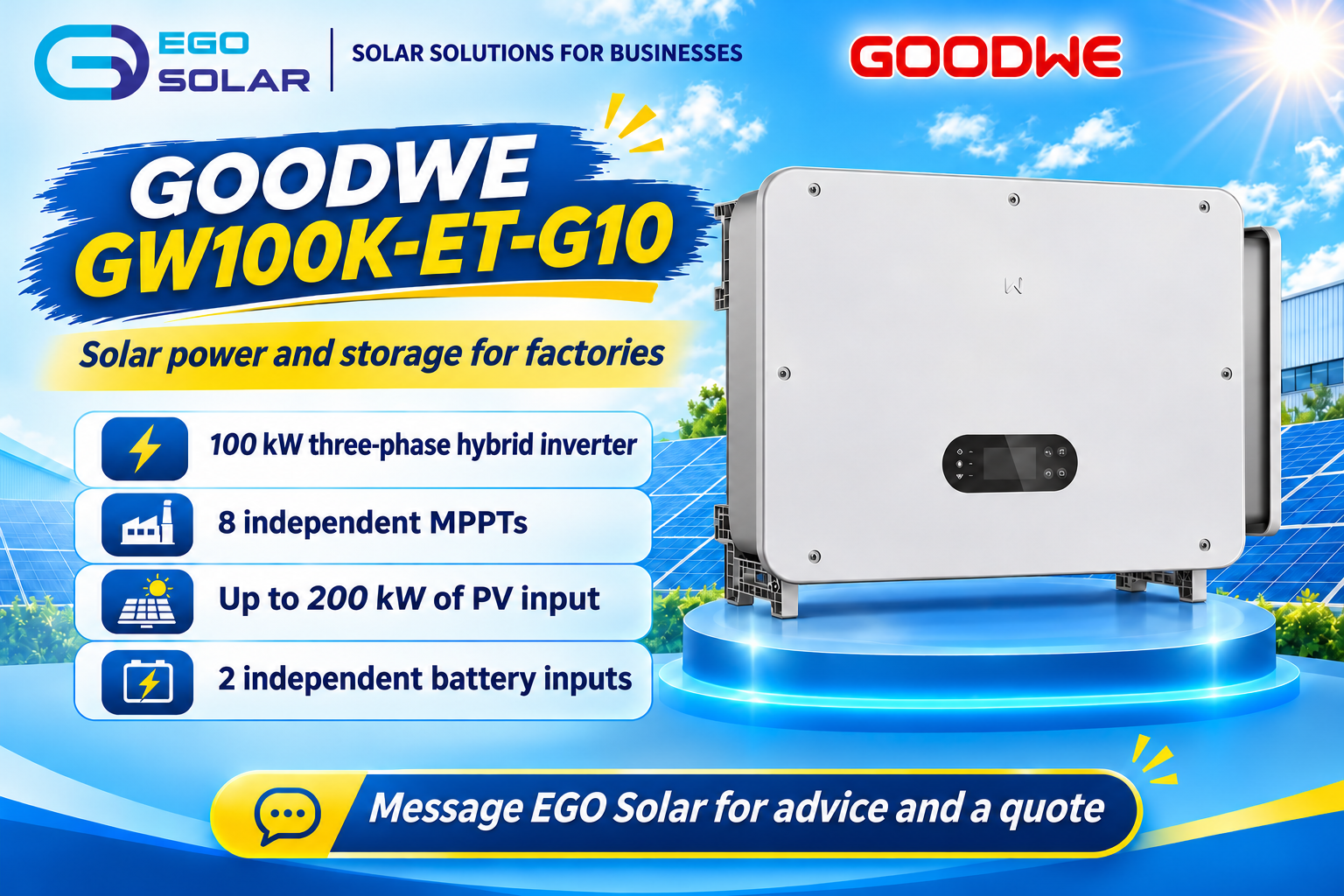
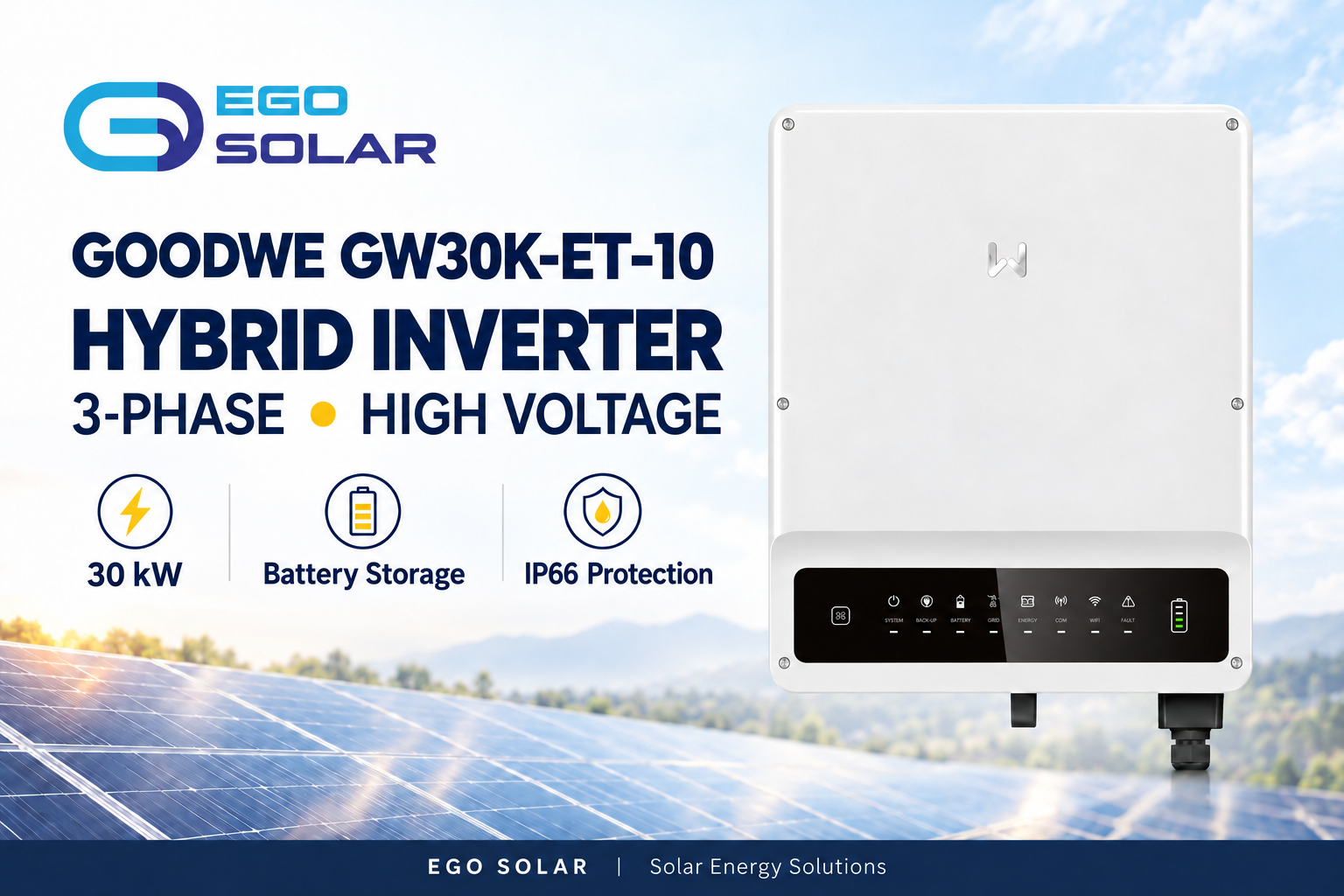
The GoodWe GW50K-ET-10 is a 50 kW, three-phase hybrid inverter designed for commercial and industrial solar installations. It supports high-voltage battery storage, making it an option for businesses planning to combine rooftop solar generation, energy storage and backup power within a coordinated system. vn.goodwe.com
GoodWe GW50K-ET-10 Technical Specifications
The following specifications refer to the GW50K-ET-10 model in GoodWe’s Vietnamese-market ET 40–50 kW datasheet.
| Specification | GW50K-ET-10 |
|---|---|
| Rated AC output power | 50 kW |
| Nominal AC output voltage | Three-phase, 380/400 V |
| Number of MPPTs | 4 |
| Strings per MPPT | 2 |
| Battery voltage range | 200–800 V |
| Maximum conversion efficiency | 98.1% |
| Ingress protection rating | IP66 |
| Backup operation | Requires an additional STS box |
Battery selection and system design should follow the manufacturer’s compatibility requirements and the operating conditions of the installation. vn.goodwe.com
Why Consider a Hybrid Inverter for a Factory?
Use Surplus Solar Electricity During Later Shifts
A factory may generate surplus solar electricity during lunch breaks or periods of reduced production. With a compatible battery system and suitable operating settings, that surplus can be stored for use later.
For example, a workshop that reduces machine operation around midday but continues production into the evening may benefit from shifting some daytime solar energy into its later shift. The value of this arrangement depends on the amount of surplus generation, battery losses, electricity tariffs and the factory’s actual consumption schedule.
Reviewing these factors before selecting equipment helps establish whether storage is appropriate and how it should be sized.
Plan Around Different Roof Sections
Factory rooftops can include several sections with different orientations, slopes or shading conditions. These differences affect how much electricity each group of solar modules produces throughout the day.
The four MPPTs in the GoodWe GW50K-ET-10 provide separate tracking channels for appropriately configured groups of solar strings. This gives designers flexibility when arranging modules across different roof sections. String voltage, current limits and shading still need to be assessed during the design process. vn.goodwe.com
How to Size Battery Storage for a 50 kW Hybrid Inverter
Battery sizing starts with the factory’s intended use of stored energy. A business seeking to supply an evening shift may need a different configuration from one prioritising short-duration backup for essential equipment.
Two measurements are particularly useful:
- Power in kW describes the rate at which equipment consumes electricity.
- Energy in kWh describes the electricity required over a period of operation.
For example, equipment drawing an average of 20 kW for two hours requires approximately 40 kWh of electricity. The installed battery capacity must also account for conversion losses, usable discharge limits and the reserve required by the operating strategy.
The system designer should then check whether the available solar surplus can recharge the battery under typical operating conditions. Reviewing several representative days provides a more realistic basis than using
Can the GoodWe GW50K-ET-10 Provide Backup Power?
The GW50K-ET-10 supports backup operation when installed with the required Static Transfer Switch, or STS, box and a correctly designed system. GoodWe specifies the additional STS equipment for the inverter’s backup output function. vn.goodwe.com
A practical backup design begins with a list of priority loads. These might include production control equipment, communication systems, lighting or selected machinery.
For motors, pumps and compressors, engineers should assess starting current as well as normal running power. Several machines starting together can place a substantially higher demand on the system than their steady operating load.
Backup duration depends on the battery’s available energy and the connected load. Defining the required operating time early helps determine an appropriate storage configuration.
What Determines the Cost of a GoodWe 50 kW Hybrid System?
A project quotation should identify the equipment and work included in the proposed installation. Depending on the project, the scope may cover:
- The GoodWe GW50K-ET-10 inverter.
- Compatible battery storage and associated controls.
- STS equipment for backup operation.
- Solar modules and mounting structures.
- Electrical protection, cabling and distribution equipment.
- Installation, configuration and commissioning.
Existing rooftop solar systems may require additional assessment before integration. Available roof space, electrical infrastructure and the intended backup loads all influence the final design.
Comparing quotations with the same equipment scope and operating requirements helps businesses evaluate the investment more accurately.
Discuss Your Factory Solar Project with EGO SOLAR
EGO SOLAR provides solar equipment and system solutions, including EPC services covering design, procurement and construction, as well as solar operation and maintenance services. These capabilities support businesses assessing rooftop solar projects and their ongoing operating requirements. egosolar.vn
For a GoodWe GW50K-ET-10 consultation, prepare your factory’s production schedule, recent electricity bills and a list of essential loads. If solar panels are already installed, include generation records and the existing equipment specifications.
Contact EGO SOLAR to discuss a configuration and request a project quotation.
- Business hotline: +84 937 610 858
- Project email: projecteam@egosolar.vn
- Website: egosolar.vn
Contact details are listed on the EGO SOLAR website. egosolar.vn